 Zero-Based Budgeting Explained: Does Every Dollar Really Need a Job?
Have you ever reached the end of the month and wondered where all your money went? You’re not alone. Traditional budgets often focus on tracking spending after it happens. Zero-based budgeting helps you decide where every dollar will go before the month begins.
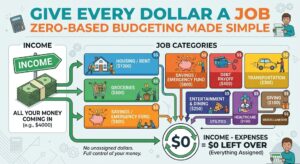
The concept is simple. Instead of wondering what’s left after paying bills, you assign every dollar of your expected income a purpose. Your budget follows one basic formula… Income – Expenses = $0
This doesn’t mean you spend every dollar or empty your bank account. It means every dollar is assigned to a category such as housing, groceries, utilities, debt payments, savings, retirement, entertainment, or a miscellaneous buffer. By the time you’re finished, every dollar has a purpose.
Does every dollar really need a job? Yes. When money has no assignment, it’s easier to overspend on impulse purchases, forgotten subscriptions, or unnecessary expenses. Giving each dollar a role creates clarity and helps ensure your spending reflects your priorities.
One of the biggest advantages of zero-based budgeting is that it encourages thoughtful decisions. If you want to spend more on dining out or entertainment, you’ll need to move money from another category.
Getting started is simple. Estimate your take-home income, list your expenses, fund savings goals, then assign the remaining money until every dollar has a job. Track your spending and adjust categories as needed throughout the month.
Zero-based budgeting isn’t about restriction or perfection. It’s about giving your money direction. When every dollar has a purpose, you’re no longer wondering where your money went, you’re confidently telling it where to go.
How do I budget?
I’ve used the zero-based budgeting system for many years. It helps keep my spending in check and shows me where I might be wasting money. Yes, I do have discretionary money built in so I can waste some, but not like a drunken sailor.