Why Your Budget Looks Good on Paper but Fails in Real Life
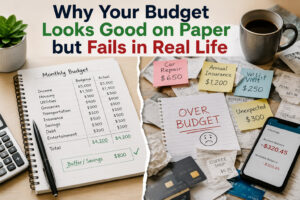 You spent hours building a pristine spreadsheet. Income lines up perfectly with projected expenses, leaving a neat buffer. On paper, you’re a financial genius. But mid-month, the plan falls apart. You transfer money from savings, reach for a credit card, and wonder where the math went wrong. The problem isn’t that you’re bad with money. It’s that your budget describes an ideal month instead of real life.
A paper budget assumes perfect behavior, cooking every meal, avoiding impulse purchases, and spending nothing unexpected. Real life doesn’t work that way. A $5 coffee, delivery fees, or a spontaneous dinner quietly consume money you planned to save.
Then there are what I call phantom or irregular expenses, costs that aren’t monthly but are predictable. Car repairs, annual memberships, insurance premiums, and vet visits don’t disappear simply because they don’t occur monthly.
Life also brings surprises such as broken appliances, unexpected storm damage, or seasonal utility spikes. Without margin, one irregular expense knocks everything off track.
The fix is to budget for real life, not your ideal self. Review past statements to identify irregular expenses. Next, estimate their annual cost and divide by 12. Set aside money monthly in preplanned spending funds for car repairs, gifts, travel, and home maintenance. Finally, add a small flexible-spending category for breathing room.
A budget isn’t a test you pass or fail, it’s a living tool.
That’s the approach I use in our own household budget.
I started by allocating 15% straight into savings for future expenditures and financial reserves. Next came fixed obligations (mortgage, budgeted utilities, escrow, and core insurance premiums). Finally, I used what remained to fund our variable expenses such as gas, preplanned spending funds, and other discretionary spending.
The best budget isn’t the one that looks perfect on paper. It’s the one that still works when life happens.
What’s the #1 irregular expense that sneaks up on your household budget? Share yours in the comments.