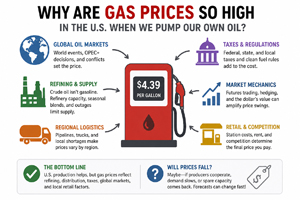
 I will digress from my normal topics to discuss why are gas prices so high in the U.S. when we pump our own oil? Because domestic drilling doesn’t automatically translate to cheap pumps, the gasoline market has a flair for drama.
First, global oil markets set the price. U.S. crude is still part of the international game, so OPEC+ mood swings, wars, and diplomatic tantrums move prices here.
Crude oil is the main drama queen. Crude ≠ gasoline. Refining capacity, seasonal blend swaps, and surprise refinery outages mean we don’t always get as much gas as we want, like having a bakery full of flour but no working oven.
Regional logistics pinch pockets. Pipelines, truck routes, and local shortages can make one state pay boutique prices while another gets a discount aisle.
Taxes and regulations sneak in. Federal, state, and local fuel taxes plus clean‑fuel rules add cents (or more) per gallon, the polite friend who always remembers the bill.
Market mechanics and currency add plot twists. Futures trading, hedging, and a weak dollar can amplify price swings, imagine speculators playing hot potato with oil contracts.
Retail margins and competition finish the show. Station density, rent, and local competition determine the final markup, some pumps behave like artisanal coffee shops for gasoline.
Moral of the story:
U.S. production helps, but gas prices reflect refining, distribution, taxes, global markets, and local retail dynamics. Will prices fall? Maybe, if producers get cooperative, demand naps, or spare capacity strolls back in. Analysts sometimes predict modest easing, but forecasts flip faster than a weather app, so treat any relief like a limited‑time coupon.