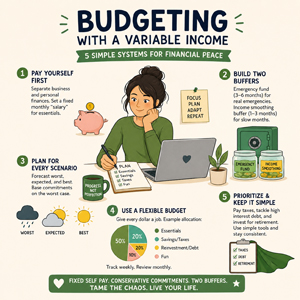
 Budgeting with a variable income is doable, like juggling flaming torches on a unicycle, if you follow a few smart systems.
First, separate business and personal finances and pay yourself a fixed “salary” each month. Think of it as your reliable life support system. Rent still gets paid even if your latest viral idea only earned you one loyal fan who loved your cat. Calculate a baseline monthly living amount (essentials only) and set that as your minimum payout. If business income falls short, use your personal buffer.
Build two buffers. Create an emergency fund (3–6 months of essentials) and an income smoothing buffer (1–3 months). The emergency fund is for true crises, medical bills, car repairs, or an espresso machine revolt. The smoothing buffer covers slower months so you can maintain expenses without touching emergency savings. When income spikes, funnel extra money toward taxes, retirement, debt payoff, and reinvestment.
Forecast with three scenarios, worst, expected, and best. Base recurring commitments like rent, subscriptions, and loans on the conservative scenario so you don’t accidentally budget for a yacht lifestyle on canoe income. Treat discretionary spending as flexible, using only surplus after essentials are covered.
Use a flexible budgeting method like modified zero based budgeting or percentage allocations, for example 50% essentials, 20% savings/taxes, 20% reinvestment/debt, and 10% fun. Track spending weekly and review monthly to compare forecasts with reality.
Moral of the story:
Prioritize quarterly taxes, high interest debt, and steady retirement contributions because compounding is basically free money in a cape. Keep it simple with a spreadsheet or budgeting app and calendar reminders. With fixed self-pay, conservative commitments, and two buffers, you can tame the chaos and maybe stop checking your balance at 3 a.m.