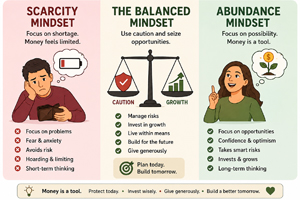
 Two common attitudes toward money shape how people live, plan, and feel; scarcity mindset and abundance mindset. Each brings a different emotional tone and practical approach, and knowing which you default to can change how you spend, save, and take risks.
Scarcity mindset treats money as limited and precarious. People who hold this view focus on shortage. Every dollar seems precious, expenses trigger anxiety, and the future feels uncertain. This can lead to conservative financial choices, strict budgeting, prioritizing debt repayment, and avoiding discretionary spending, which is prudent after hardship. But scarcity can also produce counterproductive behaviors such as hoarding, fear-driven avoidance of investment, and an inability to see opportunities that require short-term spending for long-term gain (education, networking, or a well-timed investment). Emotionally, scarcity fuels stress and a narrow focus on survival rather than growth.
Abundance mindset sees money as a tool that can grow. Rather than fixating on limits, this attitude emphasizes potential including investing, entrepreneurship, and strategic risk-taking. People with an abundant outlook are more likely to allocate funds toward education, retirement accounts, or business ventures, believing that smart choices can multiply resources. This attitude encourages generosity and collaboration, sharing resources often brings returns through relationships and goodwill. However, unchecked abundance optimism can tip into overconfidence: overspending, excessive risk, or underestimating financial constraints.
Moral of the story:
The healthiest relationship with money blends the two. Balance scarcity’s caution with abundance’s optimism. Keep an emergency fund, control debt, and live within your means, while also investing wisely, seizing opportunities, and giving generously but thoughtfully. Start by tracking cash flow to reduce anxiety (scarcity’s strength), then set measurable goals for investment and skill-building (abundance’s strength). Reframing money as a flexible tool rather than a fixed fate shifts decisions from reaction to strategy, letting you protect today while building tomorrow.