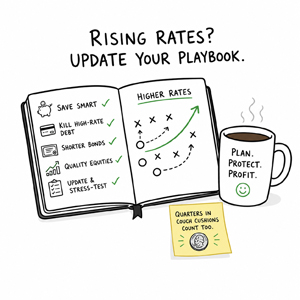
 Rising interest rates reshape your financial playbook, but with a clear plan (and a tiny sense of humor), you can protect cash, lower costs, and maybe even profit, like finding quarters in couch cushions.
Start with liquidity. Move emergency savings into high-yield accounts or short-term CDs to capture better returns while keeping access. Avoid locking all cash into long-term instruments unless you’re being paid enough to commit, “marriage proposal” level commitment, not just a date.
Attack high-rate debt first. Credit cards and variable-rate loans get angrier as rates climb so prioritize extra payments. For mortgages, don’t reflexively refinance. If you have a low fixed rate, refinancing into a shorter term can save interest but only if closing costs and break-even timelines make sense, no impulse refinancing, no matter how persuasive the late-night refinance ads are. Adjustable-rate mortgages deserve scrutiny. Model higher payment scenarios and keep a 3–6-month buffer.
Rebalance fixed-income exposure. Rising rates push bond prices down, especially long-duration bonds. Shift toward short-duration bonds, T-bills, or floating-rate notes to reduce sensitivity. Ladder maturity dates to lock in current yields and maintain reinvestment flexibility.
Equities react unevenly. Financials (banks, insurers) often benefit from wider net interest margins, while rate-sensitive sectors (utilities, REITs) can sulk. Focus on quality companies with strong balance sheets and pricing power that can weather higher financing costs.
Refine cash-flow and budget forecasts. Update loan expense projections, stress-test for higher rates, and tighten discretionary spending if needed. Use rising rates to renegotiate variable-contract terms (lines of credit, supplier financing) before resets occur.
Moral of the story:
Stay opportunistic. Higher yields can be a safe, income-enhancing tool. Combine defensive moves (debt reduction, short-duration bonds) with selective repositioning (quality equities, laddered fixed income) to balance risk and reward. Remember, if your portfolio starts doing cartwheels, check whether that’s the market or you forgetting to buckle the seatbelt.