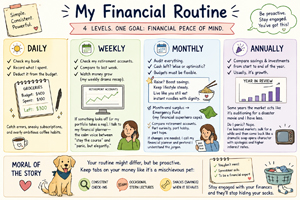
 What is my financial routine? I have four levels: daily, weekly, monthly, and annually. I run it on four levels: daily, weekly, monthly, and annually. And yes, it’s more exciting than it sounds.
Daily: I check my bank, record anything I spent, and deduct it from the budget. If I have $400 for groceries and spend $100, I list the $100 and, ta‑da, my grocery budget magically becomes $300. It’s like watching a magic trick where catching errors, sneaky subscriptions, or overly ambitious coffee habits.. I also check my retirement accounts weekly to compare them to the previous week, because watching money grow is my version of a weekly drama recap. If something looks off (or my portfolio decides to take an unexpected nap). If something looks off, I talk to my financial planner—the calm voice between “stay the course” and “panic, but elegantly.”
Monthly: I audit everything. How much cash is left? Did I budget wisely or optimistically? Budgets must be flexible, if you get a raise, boost savings while keeping lifestyle steady. Keep living like you still eat instant noodles with dignity. My month‑end surplus gets pushed into my emergency fund since I’m retired; emergency fund = financial superhero cape.
I also compare my retirement accounts monthly, part curiosity, part hobby, and part hope that my investments are doing more heavy lifting than I am. If things need changing, I call my financial planner and pretend I understand the jargon.
Annually: I compare my savings and investments from the start of the year to the end. Usually, it’s growth. Some years the market acts like it’s auditioning for a disaster movie and I have less. Do I panic? Nope. I’ve learned markets sulk for a while and then come back like a dramatic soap opera character with apologies and higher interest rates.
Moral of the story:
Your routine might differ, but be proactive. Keep tabs on your money like it’s a mischievous pet, consistent check‑ins, occasional stern lectures, and snacks (savings) when it behaves. You don’t need fancy tools. This can all be done on paper and you don’t need to be a spreadsheet expert. Stay engaged with your finances and they’ll stop hiding your socks.