 If you’ve got the basics down, matching coupons to items and checking whether discounts stack, there are a few extra couponing tactics that can make a noticeable difference.
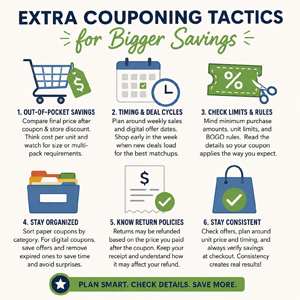
One is learning how “out-of-pocket” savings work. A great deal isn’t always the biggest percent-off. Sometimes a coupon drops a high-priced item just enough to beat another brand’s regular sale price. Compare the final price (after coupon and any store discount) and think in terms of cost per unit when possible. If you’re using digital coupons, double-check the unit price too, because some deals require buying a specific size or multi-pack.
Another tactic is timing and deal cycles. Many stores rotate promotions weekly, and coupon offers (especially digital ones) can appear or expire on set dates. Planning your shopping around store sale cycles helps your coupons line up with the items on sale, which is where the best savings usually come from. If you can, shop early in the week after new deals load. Avoid chasing a coupon that expires the same day unless the item is already a good deal.
Pay attention to thresholds and limits. Some coupons require a minimum purchase amount, while others limit how many units you can buy with that offer. There are also “buy one, get one” dynamics where the math matters: a coupon might only discount the item that’s cheapest, or it might apply to the free one depending on the store’s rule. Looking at the coupon’s details before you add items to your cart can prevent accidental mismatches.
For paper couponers, organization is a huge time-saver. Instead of searching at checkout, sort coupons by category and keep the high-frequency ones separated (like pantry staples). For digital coupon users, “save” offers in your account and clear out expired ones so you’re not guessing what will actually apply.
Finally, don’t ignore return/exchange behavior. If you use a coupon and then return an item, stores may refund you based on the discounted price, not the original shelf price. That can affect the value of a deal you thought was perfect. If you’re unsure, keep the receipt and understand how the coupon redemption changes your purchase price.
Moral of the story:
The most effective couponing habit is staying consistent: check offers before shopping, plan around unit price and deal timing, and always verify the final savings at checkout. Over time, you’ll develop a system that makes discounts feel predictable rather than random.