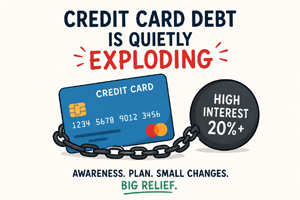
 Credit card debt is having a moment, and not the fun, TikTok-dance kind. While headlines cheer about cooling inflation or a resilient job market, something quieter is happening. More people are carrying larger credit card balances, and they’re sticking around longer (like that one houseplant you forgot to water).
At first glance, it makes sense. Everyday costs are still high, groceries, insurance, utilities, and services haven’t returned to “normal.” When income doesn’t stretch, credit cards become the buffer. Swipe now, figure it out later. The problem is what happens later.
Credit cards aren’t just a convenience; they’re one of the most expensive ways to borrow. With average interest rates around 20% or more, a balance that feels manageable can snowball faster than your group chat’s guilt trips. Minimum payments create the illusion of progress but mostly cover interest. The balance lingers, then grows, then starts to feel permanent, like that gym membership you privately regret.
What’s different now is how normalized this has become. Carrying a balance used to be a short-term fix. Now, for many households, it’s part of the monthly routine. That shift is where things get risky, when debt becomes background noise, it’s easier to ignore how much it’s costing (until you open your statement and have a small existential crisis).
There’s also a behavioral layer. After years of stress, pandemic disruptions, inflation spikes, rising rates, people are tired. That fatigue leads to more “just this once” spending decisions, which quietly stack up like bad takeout receipts.
Moral of the story:
The good news? This is a fixable financial problem. Awareness is the turning point: know your total balance, interest rates, and how much you pay in interest each month.
From there, small changes matter: pay more than the minimum, prioritize high-interest cards, and temporarily cut discretionary spending to free up cash. Think of it as a diet for your wallet, fewer impulse fries, more long-term savings.
Credit card debt builds quietly, but with a plan and a little attention (and maybe fewer impulse purchases), it can unwind.