 Consumer credit and fraud are the two ways criminals can turn your financial life into a guessing game. Scams often start small, an email that looks real, a “verification” text, a call from someone claiming to be your bank, then escalate into credential theft or unauthorized charges. Identity theft-related losses can follow a different path. Instead of stealing money directly, scammers steal your ability to obtain credit, open accounts, or pass background checks. Either way, the result is the same: stress, paperwork, and time spent trying to repair your credit profile.
One reason fraud is so effective is that it adapts to how people behave. If you’ve been shopping online lately, expect fake order updates. If you use delivery services, expect “missed delivery” lures. If you’ve recently changed passwords or received a security alert, expect a follow-up scam claiming you must “confirm” again, often through a malicious link. Treat urgency as a red flag. Legitimate companies rarely pressure you to act immediately.
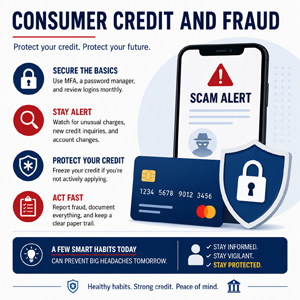
To reduce risk, secure the basics: enable multi-factor authentication on email and banking, use a password manager, and review account logins monthly. Watch for unusual signs such as unfamiliar merchants, new credit inquiries you don’t recognize, or changes to your phone number or email settings. For credit, consider freezing your credit with the major bureaus if you’re not actively applying for credit. It can prevent many new-account fraud attempts.
When you suspect fraud, act fast. Contact the affected issuer immediately to dispute charges or close compromised accounts. Then document everything, screenshots, dates, confirmation numbers. If identity theft is involved, file reports with the appropriate channels and place extended protections (like fraud alerts) as needed. Recovery is easier when you move early and keep a clear paper trail.
Moral of the story:
Consumer credit fraud isn’t inevitable. With a few disciplined habits, and a healthy skepticism toward urgency, you can stop scams before they become losses.