 Andrew Jackson was the last and only president to balance the Federal budget and bring the national debt to zero in 1835. Unfortunately, the Panic of 1837 (a huge financial crisis) occurred. The U.S. started borrowing again after the Panic and hasn’t stopped since.
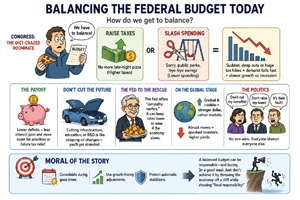
So, what if the U.S. balanced the federal budget today? Picture Congress as a diet-crazed roommate. Either they raise taxes (no more late-night pizza) or slash spending (sorry, public parks, bye-bye swings). If balance comes from sudden, deep cuts or huge tax hikes, combined demand would fall fast, risking slower growth or a recession. That’s the economic equivalent of ripping off a band-aid and realizing you’ve also pulled out a chunk of skin.
Medium-term, lower deficits would mean less interest paid to bondholders and more breathing room for other priorities, or the mysterious “future tax relief” promised by politicians. Axing infrastructure, education, or R&D is like telling your car to stop getting oil changes to save money: eventually you’ll be stranded. Trim waste and inefficiency? That’s the fiscal equivalent of finally recycling 17 empty coffee cups.
The Fed would probably try to soften the blow, think of it as the friend offering you sympathy nachos when the budget roommate steals your fries. If fiscal tightening cools inflation, the Fed can keep rates lower. If it pushes the economy into a slump, expect monetary consolation prizes.
On the global stage, credible, gradual consolidation might strengthen the dollar and calm markets. Abrupt moves could spook investors and send yields on a roller coaster. Politically, choosing what to cut is a reality show no one wins, entitlement cuts infuriate voters, tax hikes upset donors, and everyone blames everyone else.
Moral of the story:
Best practice? Time consolidation during good years, favor growth-friendly adjustments, and preserve automatic stabilizers so ordinary recessions don’t turn into full-blown soap operas. A balanced budget can be responsible, and maybe even boring, which in policy terms is high praise. But try not to achieve it by throwing the economy off a cliff while shouting “fiscal responsibility!” from the top.