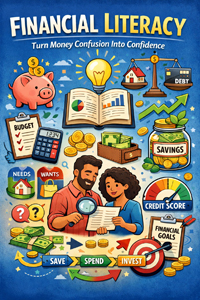
 Financial Literacy: It’s not About Being Good at Math—It’s about being good at life! Financial literacy is often misunderstood as knowing how to budget perfectly, invest expertly, or memorize financial jargon. In reality, it’s much simpler—and far more powerful. Knowing how money works is the ability to understand how money works in your everyday life so you can make informed decisions instead of reactive ones.
At its core, financial literacy is about awareness. It means knowing where your money comes from, where it goes, and why it behaves the way it does. It’s understanding the difference between income and cash flow, debt and leverage, saving and hoarding. It’s recognizing that money decisions are rarely logical alone—they’re emotional, habitual, and deeply tied to stress, fear, and identity.
Being financially literate doesn’t mean you never make mistakes. It means you understand the trade-offs. You know that convenience often costs more, that “free” usually isn’t, and that small recurring expenses can quietly shape your future. You’re able to read a bill, question a fee, and pause before signing a contract that doesn’t fully make sense.
Understanding money also creates options. When you understand interest, you’re less likely to be trapped by debt. When you understand budgeting, you’re less likely to panic during an unexpected expense. When you understand your own money patterns, you stop blaming yourself and start building systems that actually work for your life.
Moral of the story:
Most importantly, financial literacy shifts money from a source of anxiety to a tool. It doesn’t guarantee wealth—but it does replace confusion with clarity. And clarity is what allows confidence, stability, and long-term progress to grow.