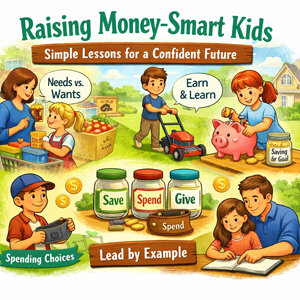
 Raising money-smart kids starts with small, simple lessons. Teaching your kids about money doesn’t mean you’re trying to raise future millionaires. It means you’re raising confident adults who know how to make smart choices. The habits they learn early will shape how they handle saving, spending, and decision-making for the rest of their lives. Many parents look back and think, I wish I had known this sooner. I know, I’m one of those parents.
The good news? It’s never too early — or too late — to start.
Begin with everyday conversations. Talk about what you’re buying at the store and why. Point out the difference between needs and wants in a natural way. When kids see that money involves choices, it becomes less mysterious and less intimidating.
Next, connect earning with spending. Whether it’s an allowance tied to chores or small jobs around the house, kids learn responsibility when they understand that money comes from effort. When they earn it themselves, they tend to treat it differently.
Encourage saving with a purpose. Instead of simply telling them to save, help them pick a goal — a toy, a game, or something special. Watching their savings grow toward something they truly want teaches patience and builds pride.
Let them make spending mistakes, too. If they blow all their birthday money at once, that’s okay. Small lessons now prevent bigger regrets later. A $20 mistake in childhood can teach wisdom that lasts for decades.
As they grow, introduce a simple system: spend, save, and give. This creates balance and helps them see money as a tool — not a source of stress.
Most importantly, lead by example. Kids pay attention to how you talk about money. Calm, intentional habits leave a lasting impression.
Moral of the story:
Healthy money skills aren’t taught in one big lecture. They’re built through everyday moments, and those moments add up to lifelong confidence.