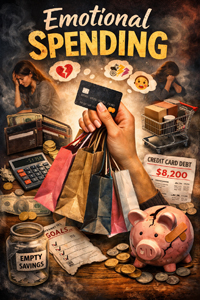
That “little treat” after a stressful day doesn’t feel like a financial mistake—until you check your bank balance and wonder where your money went. Emotional spending rarely announces itself as a problem. It shows up disguised as self-care, stress relief, or a reward you’ve convinced yourself you deserve. In the moment, it feels harmless. Over time, it becomes costly.
From a financial standpoint, emotional spending quietly derails progress. Impulse purchases like extra takeout, late-night online shopping, or stress-fueled splurges siphon money away from savings, debt payoff, and long-term goals. Individually, these purchases seem small. Collectively, they can keep you stuck in a cycle of higher credit card balances and living paycheck to paycheck—even when your income should be enough.
The emotional payoff is short-lived. That quick dopamine hit fades fast, often replaced by guilt, regret, or anxiety about money. Instead of relieving stress, emotional spending tends to amplify it. The result is a frustrating loop: stress triggers spending, spending creates financial pressure, and that pressure creates more stress—making the habit feel difficult to break.
Behaviorally, emotional spending undermines healthy money habits. It conditions your brain to associate spending with comfort, rather than encouraging healthier ways to process emotions. Over time, budgeting starts to feel restrictive or punitive, and self-blame creeps in. Many people assume they lack discipline, when in reality they’re responding to unmet emotional needs, not poor character.
Moral of the story:
The biggest cost of emotional spending isn’t what you buy—it’s the progress you lose. Money spent reacting to emotions isn’t building security, freedom, or peace of mind. Awareness is the first step toward breaking the cycle and choosing habits that support both your financial stability and emotional well-being.