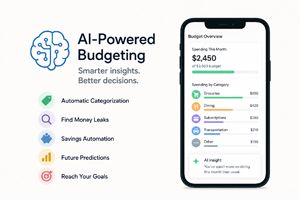
 AI-powered budgeting is becoming a mainstream way to manage money, shifting from manually tracking purchases to receiving useful guidance. As more people adopt AI-driven apps, budgeting is moving away from spreadsheets and endless check-ins to background automation that turns transactions into clearer choices.
Automatic categorization is a major advantage. AI can learn merchant names and spending patterns, keeping categories like groceries, dining, subscriptions, and transportation updated with little effort. Because categories reflect actual behavior, budgets often feel more accurate and current.
AI can help uncover “money leaks.” By identifying recurring charges, unusual purchases, or spending spikes, it can catch issues before they disrupt an entire month.
Savings automation is another benefit. Some AI tools adjust savings goals based on income timing and upcoming bills, reducing discretionary spending during tighter periods and increasing savings when finances are on track.
Prediction adds a positive element. Instead of only reporting past activity, AI can forecast cash flow using spending history, scheduled payments, and seasonal patterns, helping you prepare for lower cash periods or larger expenses. AI can also support financial goals by connecting long-term objectives with daily spending habits and showing how small changes affect progress.
Despite advantages, AI budgeting still has drawbacks. Categorization mistakes happen, especially with unclear merchant names, new subscriptions, or unusual spending, so transactions still need review. Forecasts can also become less reliable when income or expenses change suddenly, creating false confidence if followed blindly. Privacy is another concern since connecting accounts means more sensitive data moving through a service.
Moral of the story:
AI-powered budgeting is about automation and foresight. It can simplify money management, but it isn’t perfect. Categories may be wrong, forecasts can miss unexpected changes, and using these tools means trusting an app with delicate data. Personally, I’m not convinced that AI is better than my own judgment. People get complacent when they don’t make their own decisions.