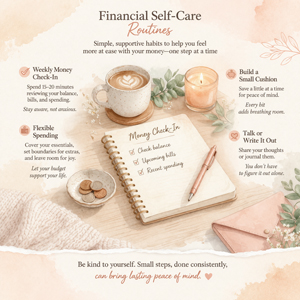
 Financial self-care doesn’t have to be complicated or intimidating. At its core, it’s about creating small, supportive habits that help you feel more at ease with your money. When your finances feel manageable, everything else tends to feel a little lighter too. It’s not about being perfect—it’s about building a sense of calm and control, one step at a time.
One gentle place to start is with a weekly check-in. Set aside 15 to 20 minutes to look over your bank balance, upcoming bills, and recent spending. Light a candle, grab a cup of coffee, and make it a moment that feels calm instead of stressful. Think of it as a quiet way to stay connected to your money—not to judge yourself, but simply to stay aware and grounded in where you are.
It can also help to create a flexible approach to spending. Instead of strict rules, aim for a rhythm that works for your life. Cover your essentials, set a general boundary for extras, and leave a little room for things that bring you joy. When your plan feels realistic, it’s much easier to stick with it—and far less likely to leave you feeling restricted.
Building a small cushion over time can bring a surprising amount of peace of mind. Even saving a little here and there adds up and creates a sense of security. It’s not about hitting a perfect number—it’s about knowing you’ve given yourself a bit of breathing room when life throws something unexpected your way.
And finally, don’t keep it all bottled up. Talking about money with someone you trust, or even writing down your thoughts, can help you process what you’re feeling and see things more clearly.
Moral of the story:
Financial self-care is really about being kind to yourself. Small, consistent steps can help you feel more in control, more supported, and a little more at peace with your finances every day.