 Creating a family budget that actually works isn’t about strict rules or cutting out every joy — it’s about building a plan your household can realistically follow. So, start by giving your money a plan and your family peace of mind.
The biggest mistake families make? Creating a “perfect” budget that doesn’t match real life. A working budget reflects your actual spending patterns, your real income, and your priorities.
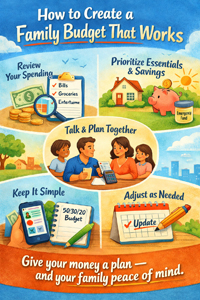
Start with clarity, not judgment. Review the last 60 to 90 days of expenses. Identify your fixed costs (mortgage or rent, utilities, insurance, childcare, debt payments) and your flexible spending (groceries, gas, eating out, subscriptions, entertainment). Seeing the numbers clearly removes guesswork and emotional spending.
Next, build your budget around priorities. Before assigning money to extras, cover essentials, minimum debt payments, and savings. Even a small emergency fund contribution builds stability. A budget works best when it protects today’s needs and tomorrow’s security.
Then make it collaborative. If you have a partner, schedule a short weekly “money check-in.” If you have kids, involve them in age-appropriate conversations about saving and spending. When everyone understands the plan, it’s easier to stick to it.
Keep it simple. You don’t need complex spreadsheets. A basic zero-based budget, the 50/30/20 framework, or even a written list can work — consistency matters more than complexity.
Finally, expect adjustments. Utility bills change. Groceries fluctuate. Life happens. A flexible budget isn’t a failure — it’s a living plan.
Moral of the story:
A family budget that works isn’t restrictive. It reduces stress, prevents surprises, and helps your money move with purpose instead of pressure. When your plan reflects your real life, budgeting stops feeling like punishment — and starts feeling like control.