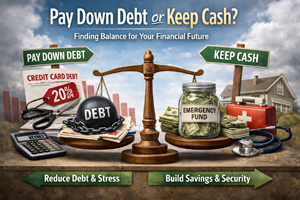
 Should you pay down debt faster or keep the cash. When extra money shows up—a bonus, tax refund (remember, it’s tax time), or an unusually good month—it often triggers the same dilemma: should you use it to pay down debt faster, or hold onto the cash? While spreadsheets can offer guidance, this decision isn’t purely mathematical. It’s about risk, flexibility, and peace of mind.
Paying down high-interest debt—especially credit cards—offers a guaranteed return. Eliminating a balance with a 20% APR is like earning 20% risk-free. Reducing debt also lowers your monthly obligations, improves cash flow, and can strengthen your credit over time. For many people, the emotional relief of shrinking balances is just as valuable as the financial gain.
At the same time, cash plays a critical role. An emergency fund acts as your financial shock absorber. Without it, even minor surprises—car repairs, medical bills, or temporary income loss—can force you back into debt. Cash provides flexibility, security, and the ability to handle uncertainty without panic. In an unpredictable economy, liquidity has real power.
For most people, the smartest approach is a balance. Build a basic emergency fund first—typically three to six months of essential expenses—while continuing to pay down high-interest debt. Once you have that safety net, you can confidently accelerate debt payoff or redirect money toward long-term goals like investing.
Moral of the story:
There’s no one-size-fits-all answer. If debt is draining your finances and your mental energy, prioritize paying it down. If one unexpected expense could derail you, protect your cash. True financial progress comes from resilience—not extremes—and from choosing a plan you can sustain.