 There are a lot of ways that people can commit identity theft.
So, how do people actually get your identity? First and foremost, data breaches happen on a daily basis. You hear about companies, hospitals, retail organizations and financial institutions getting hacked on a daily basis. Hackers steal information such as names, birthdates, addresses, account numbers, social security numbers, etc. Anything they think they can use to steal your identity and use it to create accounts in your name will be stolen.
Defrauders will try to emulate banks, government agencies such as the IRS, Social Security, and Medicare, retailers, delivery services, etc. They’ll claim there’s an issue with your account and try to get you to verify your identity and/or log into a bogus website. They’re very clever at creating sites that look real when clicking on a link.
Thieves may also try to steal your mail. After all, you may get bank statements, credit card offers, tax information, checks, etc. that contain personal information. They may also go through your trash to find old bills, medical information including insurance statements, etc. You need to shred anything with your name on it.
Crooks will use devices called skimmers on point-of-sale machines such as gas pumps, or ATMs. These devices will capture not only your name and credit card number, but also any PIN number you use. On this same vein, they will use unsecured public Wi-Fi’s to capture passwords, logins, and any financial information you input. NEVER EVER use a public wi-fi for personal use.
There are several other ways thieves can steal your identity. For example, social media. There are things like fake tech-support calls, romance scams, phony job offers, and utility disconnect threats. Of course, they can also physically steal your wallet or purse, phone, and/or laptop. And they’re smart. Sometimes they can get data from social media, and other things that appear online. Be careful what you post.
Moral of the story:
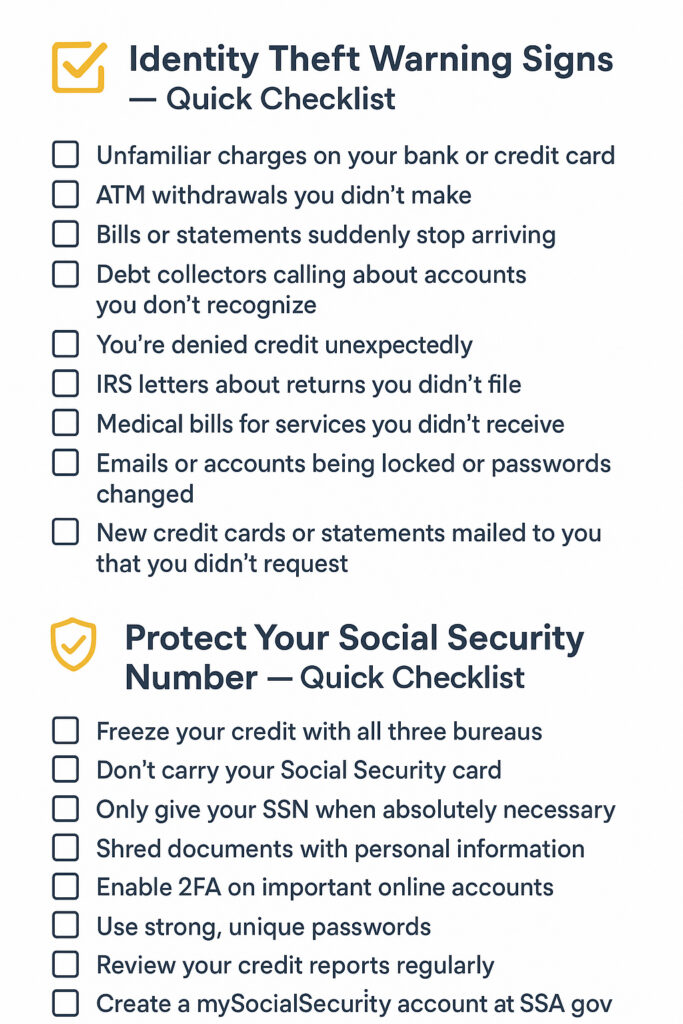
To avoid identity theft, monitor all your accounts. I have created a checklist that I hope will be helpful and it is included.